If you freelance, run your own business, or earn any income outside of a traditional W-2 job, you already know that taxes don’t just happen once a year. The IRS and New York State both require you to pay as you go. That means paying estimated quarterly taxes four times a year. The Q3 deadline falls on September 15, and August is a good time to get ahead of it.
Here’s what to know.
Who Needs to Pay Estimated Quarterly Taxes?
You generally need to make estimated tax payments if you expect to owe at least $1,000 in federal taxes for the year after subtracting any withholding and credits. New York State has a similar threshold. This applies to freelancers, independent contractors, sole proprietors, partners in a business, and S-corporation shareholders who receive pass-through income.
If your only income is from a salaried job and taxes are withheld from your paycheck, you likely don’t need to worry about this. But the moment you add consulting work, gig income, or any side business revenue to the mix, the rules change.
The Four Payment Deadlines
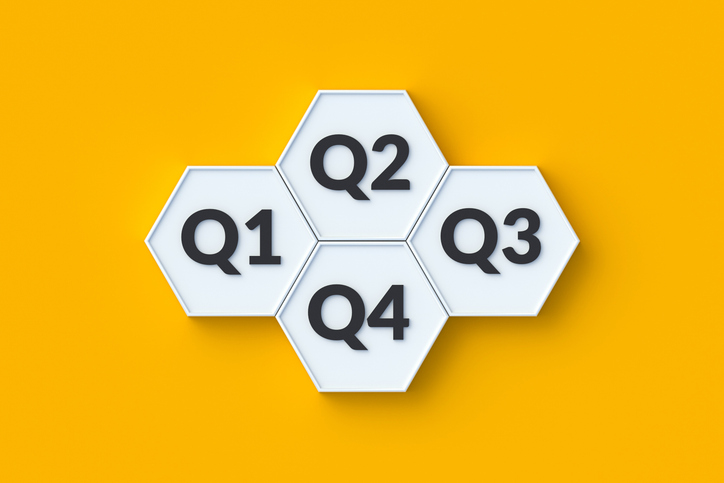
The IRS breaks the year into four payment periods:
- Q1: April 15
- Q2: June 16
- Q3: September 15
- Q4: January 15 of the following year
New York State follows the same schedule. Missing a deadline or underpaying can result in penalties, even if you pay everything you owe when you file your return in April.
How to Calculate What You Owe
There are two main approaches. The first is to estimate your actual expected income and tax liability for the year, then divide that into quarterly payments. The second is the “safe harbor” method, which lets you avoid underpayment penalties by paying at least 100% of last year’s tax liability (or 110% if your adjusted gross income exceeded $150,000).
For many freelancers, income varies month to month, making the safe harbor approach a practical baseline. You may still owe a balance in April, but you won’t be penalized for underpaying throughout the year.
New York Has Its Own Requirements
Federal and state estimated taxes are calculated and paid separately. New York State uses Form IT-2105, and New York City residents may also owe city income tax. If you live or work in New York City, your total tax burden can be meaningfully higher than the federal calculation alone suggests. This catches a lot of freelancers off guard in their first year of self-employment.
Common Mistakes to Avoid
Forgetting to set aside money for self-employment tax is one of the most common issues. On top of income tax, self-employed individuals pay both the employee and employer portions of Social Security and Medicare, which comes to 15.3% on the first $176,100 of net earnings in 2026. That’s on top of your regular income tax rate.
Another mistake is only thinking about federal taxes and overlooking state and city obligations. And some people skip a payment entirely during a slow quarter, assuming it’ll balance out. It rarely does without a penalty.
Use August to Get Organized
The Q3 payment covers income earned from June 1 through August 31. If you haven’t been tracking your income carefully this summer, now is the time to pull it together. Review your invoices, check your business bank account, and tally up what you’ve earned. If you made significantly more or less than expected, adjust your payment accordingly.
Setting aside 25 to 30 percent of each freelance payment into a separate savings account throughout the year makes this process much less stressful. It’s a simple habit that prevents a large, unexpected bill.
Talk to a CPA Before the Deadline
Estimated tax calculations can get complicated quickly, especially if your income fluctuates, you have multiple income streams, or you’re navigating both federal and New York obligations for the first time. A CPA can help you figure out what you actually owe and make sure you’re not overpaying or underpaying.
If you have questions about your Q3 payment or want to get a clearer picture of your tax situation before September 15, reach out to the team at DeSantis, Kiefer, Shall & Sarcone.